Abstract
Public mmWave radar datasets are collected under heterogeneous acquisition configurations and processing protocols, leading to systematic geometric and signal-statistical shifts across datasets. Even when the underlying hardware is similar, differences in grid resolution, field-of-view, measurable range/velocity, and the availability of a calibrated Doppler/velocity axis make naive multi-dataset aggregation unreliable and can bias models toward dataset-specific artifacts. We propose MetaARM, a metadata-conditioned self-supervised pre-training framework for heterogeneous mmWave radar perception. MetaARM partitions a 3D radar tensor into non-overlapping 3D patches and trains with causal next-patch prediction under a structured serialization order: tokens are first ordered along the sequence axis and then raster-scanned within each Range–Azimuth plane. To explicitly handle configuration shifts, MetaARM injects acquisition metadata through two coupled mechanisms: (i) Absolute Coordinate Encoding (ACE), which converts discrete patch indices into normalized physical coordinates using resolution and FoV metadata to reduce geometric inconsistency; and (ii) FiLM-based conditioning inside Mamba blocks, which calibrates token features before the selective scan according to observable acquisition/configuration metadata. Together, these pathways use the same metadata to link physical radar-token geometry with configuration-aware sequence modeling before autoregressive prediction. Pre-trained on an aggregated corpus of five public radar datasets, MetaARM improves transfer performance on three benchmarks, achieving 64.5 mAP@0.3 on RADDet, 49.5 mIoU on CARRADA (RA), and 85.0 AP on CRUW, improving over matched training-from-scratch, MAE pre-training, joint supervised, and lightweight normalization and metadata-affine calibration baselines under the reported matched settings. Overall, the results suggest that metadata-conditioned autoregressive pre-training is a practical way to learn radar representations that transfer better under cross-dataset acquisition/configuration shifts.
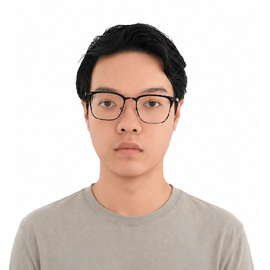
Hongliang Chen
PhD Student (2025-Now)
My current research interests span millimeter-wave radar perception, autonomous driving, and neural networks.
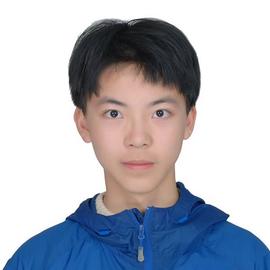
Xiaotian Jiang
PhD student (2024-Now)
My current research interests include computational electromagnetics, electromagnetics surrogate model and neural networks. We ain’t never getting older.

Kaitai Guo
Associate Professor
My research interests include broad-spectrum substance identification, microwave and infrared imaging, and system simulation and evaluation.

Yang Zheng
Associate Professor
My research interests include human behaviour analysis for intelligent diagnosis of developmental coordination disorder, aritifical intelligence, and computer vision.

Siqi Pang
PhD student (2023-Now)
Siqi Pang received the B.S. degree in Electronic Information Engineering from Xidian University in 2020. He is currently pursuing a Ph.D. degree at the School of Electronic Engineering, Xidian University. His research interests primarily focus on precision perception and practical applications of millimeter-wave (mmWave) radar.
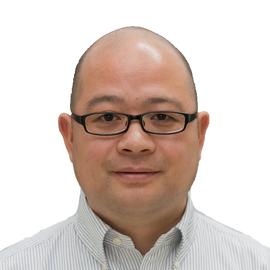
Jimin Liang
Professor of Electronic Engineering
My research interests include artificial intelligence and computer vision.